

CHIETAL | Meditation, Mind, and Neuroscience
A graph says “alpha,” an app says “calm,” and you still feel worried about tomorrow. Which one tells the real story?
An Everyday Story
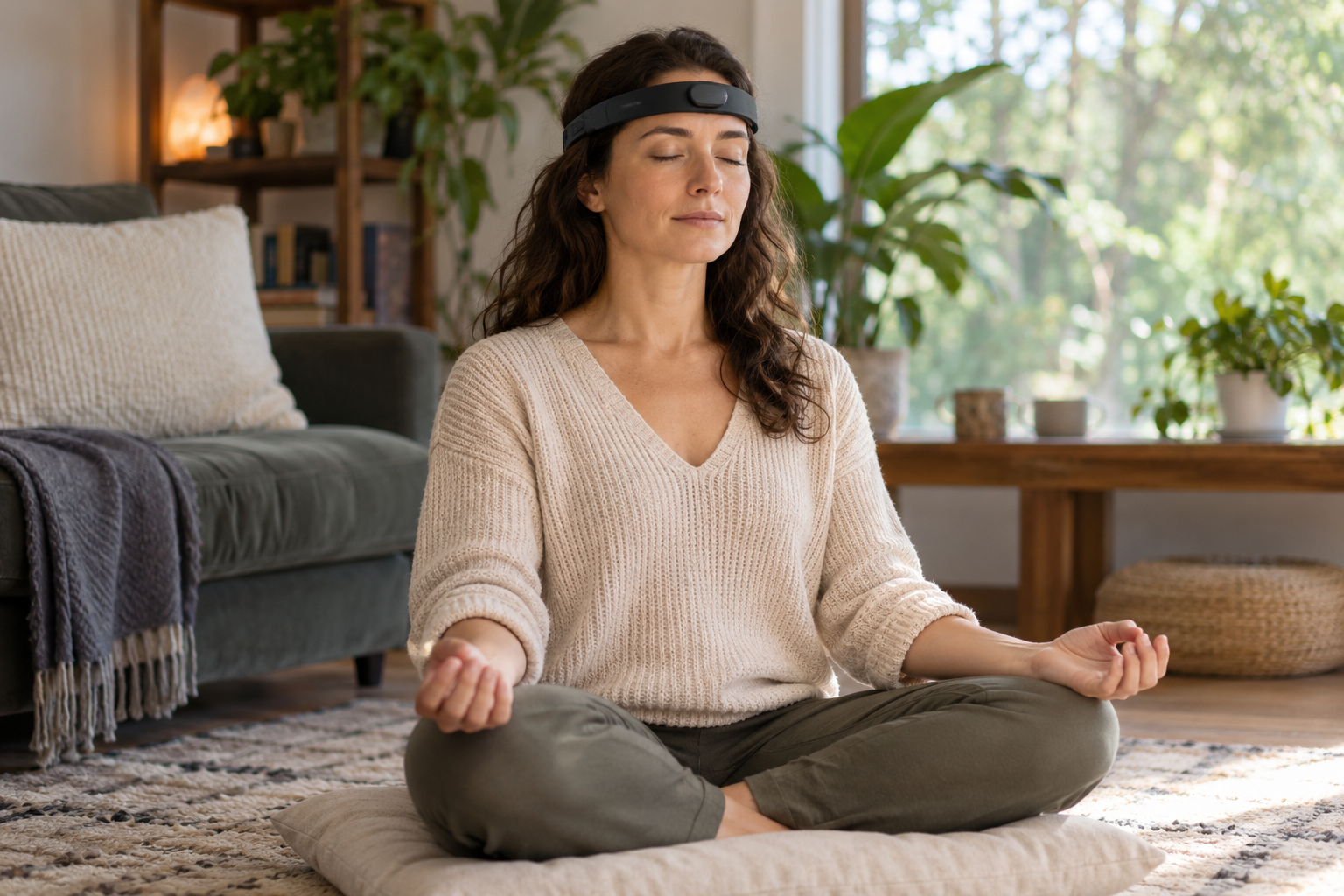

Imagine someone trying a meditation headband before an important presentation. They sit still, close their eyes, and watch a score afterward. The number looks impressive, so they expect the next day to feel effortless.
But before the presentation, their hands are tense and their thoughts race. The person feels confused: “Wasn’t my brain in the right state?” A more useful question is what the recording actually measured and what the person practiced.
They set the score aside, rehearse the opening aloud, and take a comfortable pause before speaking. During the talk, they lose their place once, look at their notes, and continue. That ordinary recovery tells them something about their behavior that yesterday’s graph could not guarantee.
This hypothetical example illustrates why brainwaves deserve careful explanation. A recording can be interesting without becoming a complete description of someone’s mind.
What exactly are brainwaves?

Brainwaves are rhythmic patterns of electrical activity generated by coordinated populations of neurons. Scientists measure their frequency in hertz (Hz), or cycles per second. For example, a 10 Hz rhythm completes approximately ten cycles each second.
Your brain does not produce just one frequency at a time. Multiple rhythms coexist across different brain regions and change with sleep, attention, movement, sensory input, and other factors. Researchers commonly discuss five broad categories: delta, theta, alpha, beta, and gamma. Their frequency boundaries are approximate and can vary among studies.
The five major types of brainwaves
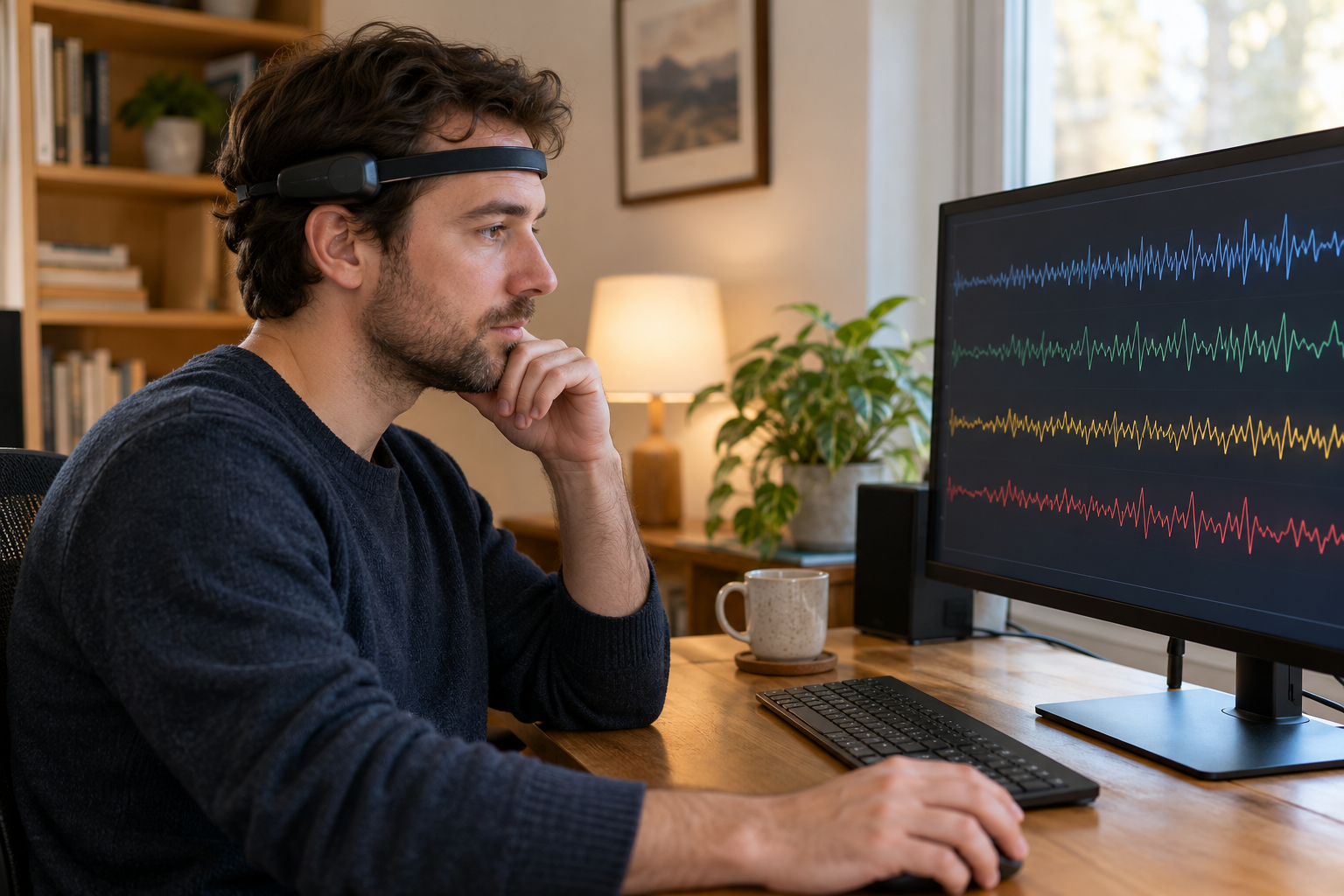
Delta: approximately 0.5–4 Hz. Delta waves are slow rhythms that are especially prominent during deep non-REM sleep. Researchers study them to better understand sleep stages and the physiology of deep sleep.
Theta: approximately 4–8 Hz. Theta activity can occur during drowsiness, certain sleep stages, memory-related processes, and some meditation practices. For example, as a person becomes sleepy, changes in theta activity may appear in an EEG recording.
Alpha: approximately 8–13 Hz. Alpha rhythms are often prominent during relaxed wakefulness with the eyes closed. They also participate in attention and sensory processing. Closing your eyes while remaining awake often increases alpha activity over posterior brain regions.
Beta: approximately 13–30 Hz. Beta activity is associated with alert wakefulness, movement-related processes, and certain cognitive activities. It may change during demanding tasks, depending on the task and the brain region being studied.
Gamma: approximately 30–80 Hz or higher. Gamma oscillations are studied in relation to sensory processing, attention, and coordination among neural populations. Some perception and attention tasks are associated with measurable changes in gamma activity.
How wearable EEG headbands measure brainwaves

Electroencephalography, or EEG, is a noninvasive method of recording electrical activity using electrodes placed on the scalp. Wearable EEG headbands use sensors to detect tiny voltage differences associated with the activity of populations of neurons. The signals are amplified and processed by software, which can examine activity within different frequency ranges.
How EEG technology works. EEG does not directly read thoughts or identify someone’s exact emotions. Recording quality can also be affected by movement, blinking, facial muscle activity, electrode placement, and electrical interference, so measurements need careful interpretation.
The BrainBit headband is one example of a portable EEG device. For a description of clinical EEG, see MedlinePlus: EEG.
What happens to brainwaves during meditation?

Meditation often involves practicing attention and awareness by focusing on breathing, bodily sensations, or thoughts. Researchers have investigated how these practices relate to EEG activity.
Some studies report changes in alpha and theta rhythms during meditation, but findings vary with the technique, the participant’s experience, and the conditions of the study. A systematic review by Lomas and colleagues examined research on mindfulness and EEG oscillations.
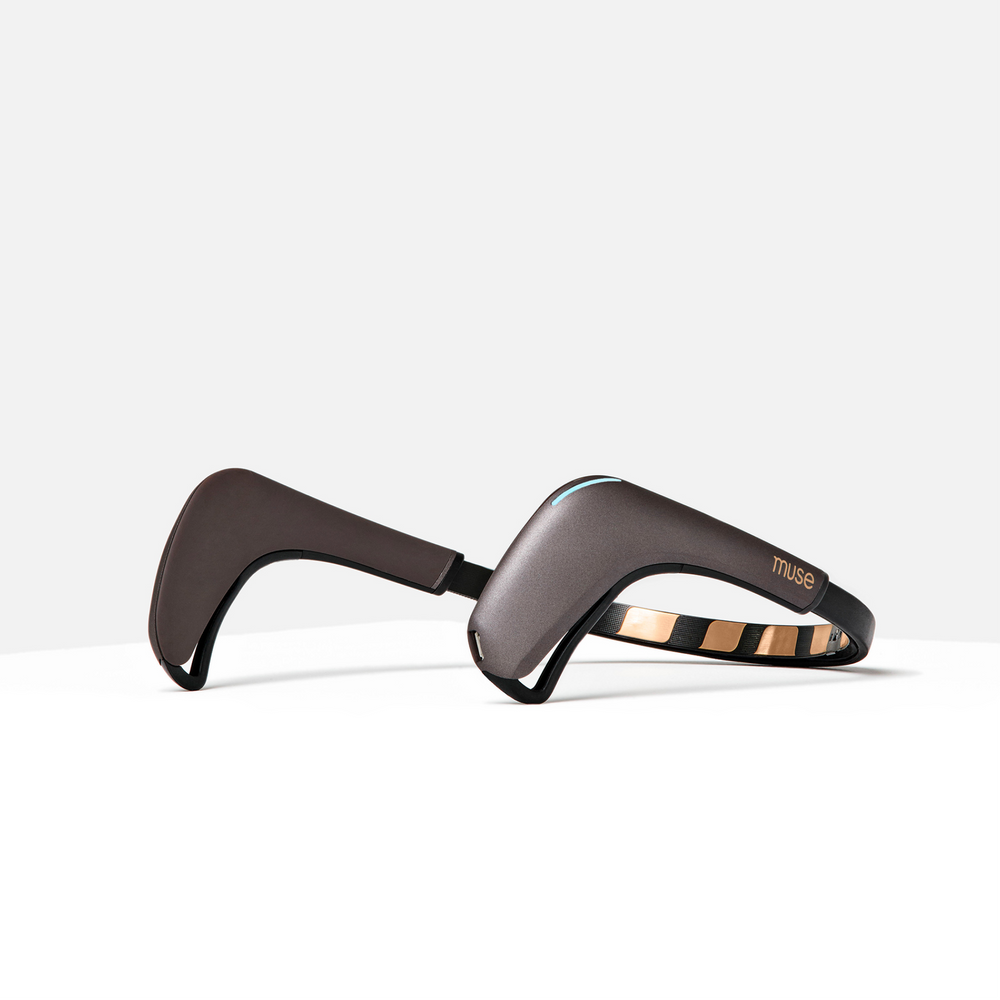
How Muse uses EEG feedback. The Muse headband is designed to provide feedback during meditation. Depending on the model and software, it processes physiological signals, including EEG, to generate feedback intended to support practice. For example, changing audio may serve as a cue to notice distraction and return attention to breathing.
That feedback is a software interpretation of recorded signals; it does not prove that someone has reached a particular level of mindfulness. Meditation is not about forcing the brain into a specific frequency. It is an opportunity to practice awareness and choose how to respond to your experiences.
How brainwaves change throughout your day

Your brain’s electrical activity changes as you move through different activities and circumstances:
Imagine starting your morning with an important project. Your brain supports planning, memory, attention, and decision-making through coordinated neural activity. Later, you close your eyes and practice quiet breathing; the change in attention and sensory input may make different rhythms more prominent. At night, your brain moves through several sleep stages, including periods of deep slow-wave sleep.
There is no single frequency everyone should maintain throughout the day. Brain activity changes with the demands of different situations.
Brainwaves, focus, and modern EEG technology

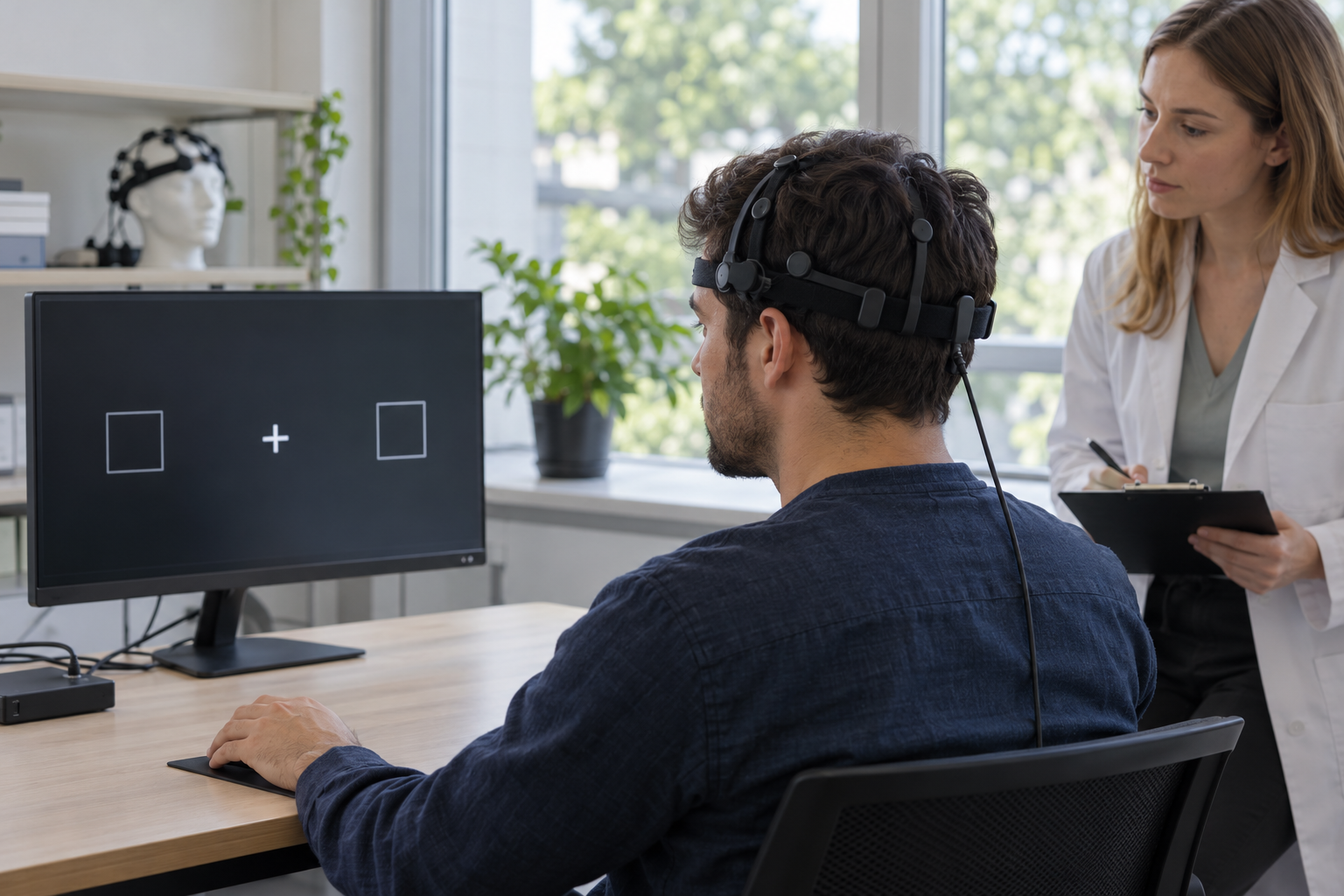
Portable EEG systems are used to investigate attention, cognitive workload, and brain-computer interaction. Cognitive workload refers to the mental effort required to perform a task. Solving a difficult math problem, for example, may require more effort than completing a familiar routine.
No single brainwave frequency provides a universally reliable measurement of concentration, intelligence, or emotional well-being. EEG activity is influenced by sleep, fatigue, movement, individual physiology, and the task being performed.
Can EEG biofeedback help you train your mind?
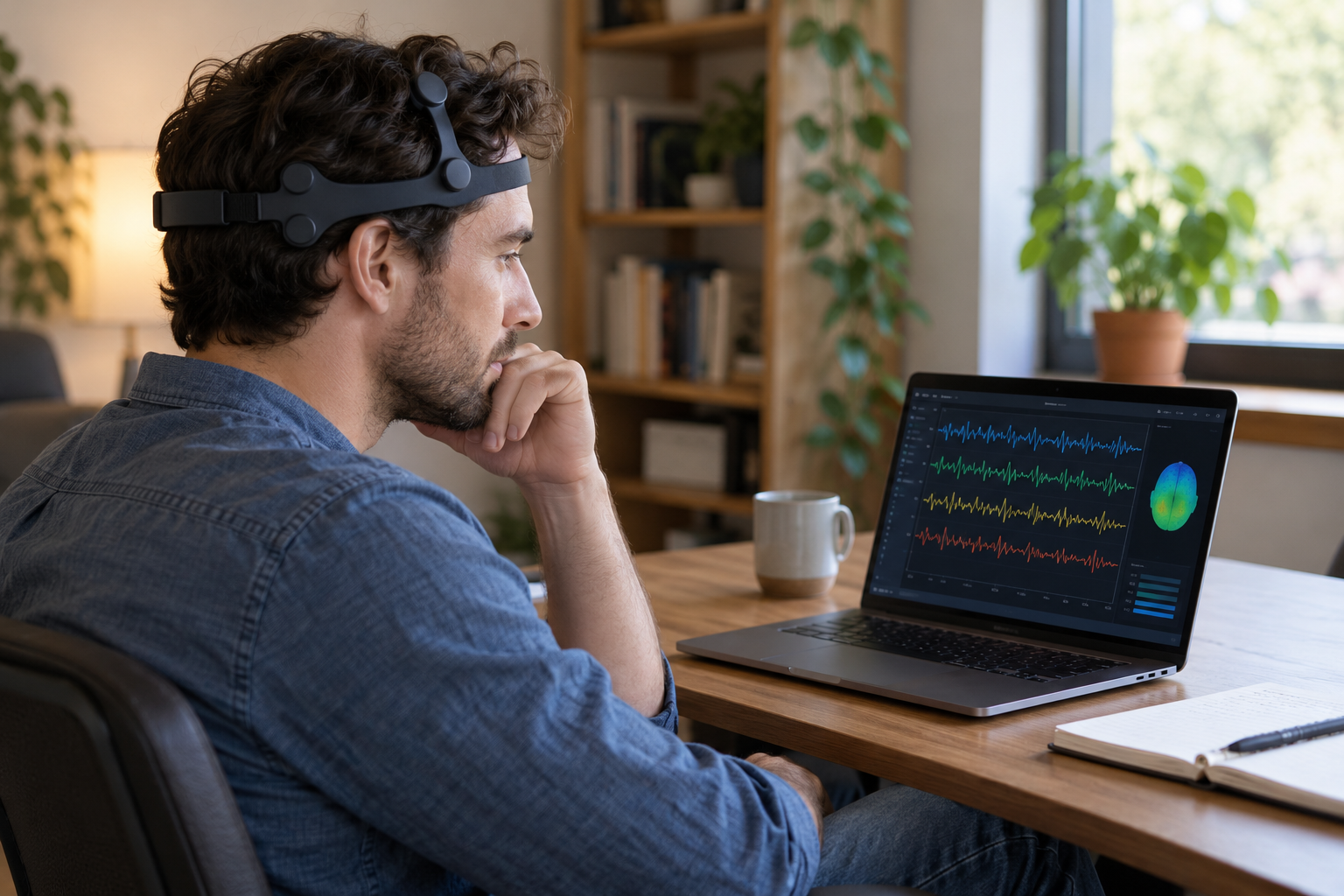
Biofeedback provides information about physiological activity so a person can practice changing certain responses. When the feedback is derived from EEG activity, it is called neurofeedback.
Imagine using an EEG headband during meditation. The device records signals, software analyzes selected features, and an application provides visual or auditory feedback. You might use that feedback as a cue to return attention to the exercise and support a regular mindfulness routine.
Evidence for neurofeedback benefits varies across devices, protocols, and intended outcomes. A device’s ability to display brainwave activity does not automatically establish that its feedback improves attention, stress management, or mental health. For everyday mindfulness, EEG feedback is optional.
Why a Rhythm Needs a Recording Context

The American Epilepsy Society introductory EEG atlas describes how posterior alpha activity is often prominent during relaxed, eyes-closed wakefulness and changes when the eyes open. That ordinary example explains why a frequency label alone cannot identify a special meditation achievement. Ask which electrodes recorded the signal, what the person was doing, and whether movement or drowsiness could explain the observation. A comparison is more informative when the recording conditions are similar.
My Thoughts: The CHIETAL Perspective
The principle of Rhythm in The Kybalion reminds me to reflect on change and fluctuation. In everyday life, alertness, rest, effort, and uncertainty do not remain fixed. I find that a useful philosophical lens for approaching my experience with less judgment.
However, the book’s metaphysical principle is not the scientific explanation of an EEG rhythm. Similar language does not make the two concepts identical. A measurable oscillation has a frequency and recording context; a philosophical teaching asks a different kind of question.
I also approach the principle of Vibration carefully. Brainwave frequencies do not demonstrate that a person is broadcasting a spiritual frequency that attracts events. My interpretation is an invitation to notice changing experience and choose a useful response. Before the presentation, that response might be rehearsal and a pause—not chasing the highest score.
The philosophical principles discussed here are presented in The Kybalion. They are interpretive lenses, rather than established laws of neuroscience.
If an exercise increases distress, stop or modify it. Meditation and consumer EEG feedback should not replace appropriate medical, psychological, or educational support. You can learn about benefits and limitations in the NIH overview of meditation.
Continue learning with What Is EEG? Understanding the Technology That Measures Your Brain and Can Meditation Improve Focus? When a Quick Phone Check Becomes Twenty Minutes.
Begin With the Free 7-Day Challenge
Bring this learning into everyday life. Subscribe to CHIETAL for the free 7-Day Brain & Mindfulness Challenge and more science-informed articles about attention, habits, and awareness. Seven days introduces a practice; it is not a deadline for changing your brain.