

CHIETAL | Meditation, Mind, and Neuroscience
You hear the meditation feedback change, and suddenly you are trying harder to earn a better sound. Are you practicing awareness—or chasing approval from an app?
An Everyday Story

Imagine an adult using EEG-assisted meditation after a stressful commute. At first, the changing sounds seem helpful. When attention wanders, the sound reminds them to return to the breath.
A few sessions later, they begin comparing results. A lower score feels like failure. They sit rigidly, worry about moving, and finish more frustrated than when they began. The tool that was supposed to support practice has become another source of pressure.
They try the next session without feedback. They notice the urge to check a result and return to the room around them. Later, they decide to use the device occasionally and judge its value by whether it supports a comfortable, sustainable practice.
This is a hypothetical example. It does not establish that devices cause frustration. It illustrates a question worth asking of any tool: what relationship am I building with the feedback?
Meditation is more than sitting quietly

Meditation is often associated with stillness and relaxation, but some practices involve active attention training. Consider sitting comfortably and focusing on your breathing. After a while, you begin thinking about an unfinished task or an upcoming conversation. Eventually, you notice that your attention has drifted and gently return to your breath. Recognizing the distraction and returning are part of the exercise.
Researchers study how mindfulness relates to these processes and to brain networks involved in attention and self-regulation. The review “The Neuroscience of Mindfulness Meditation” explores some of this research. Meditation does not necessarily require stopping your thoughts; it can involve becoming more aware of them without automatically following each one.
How EEG allows us to observe brain activity
Your brain contains billions of neurons that communicate through electrical and chemical processes. When large populations of neurons are active together, they can produce electrical patterns detectable at the scalp. Electroencephalography, or EEG, is a noninvasive method used to record these signals.
Small sensors called electrodes detect tiny voltage changes, which recording equipment amplifies and processes. Research systems may use many electrodes across the scalp. Consumer headbands typically use fewer sensors, making them more portable while also limiting the information they collect.
What can EEG actually measure? EEG shows patterns of electrical activity over time. Researchers use recordings to investigate sleep, attention, sensory processing, and other processes. EEG cannot directly read private thoughts or determine exactly what someone is feeling. Interpreting the recordings requires analysis, context, and scientific validation.
Can you hear your own brain activity?
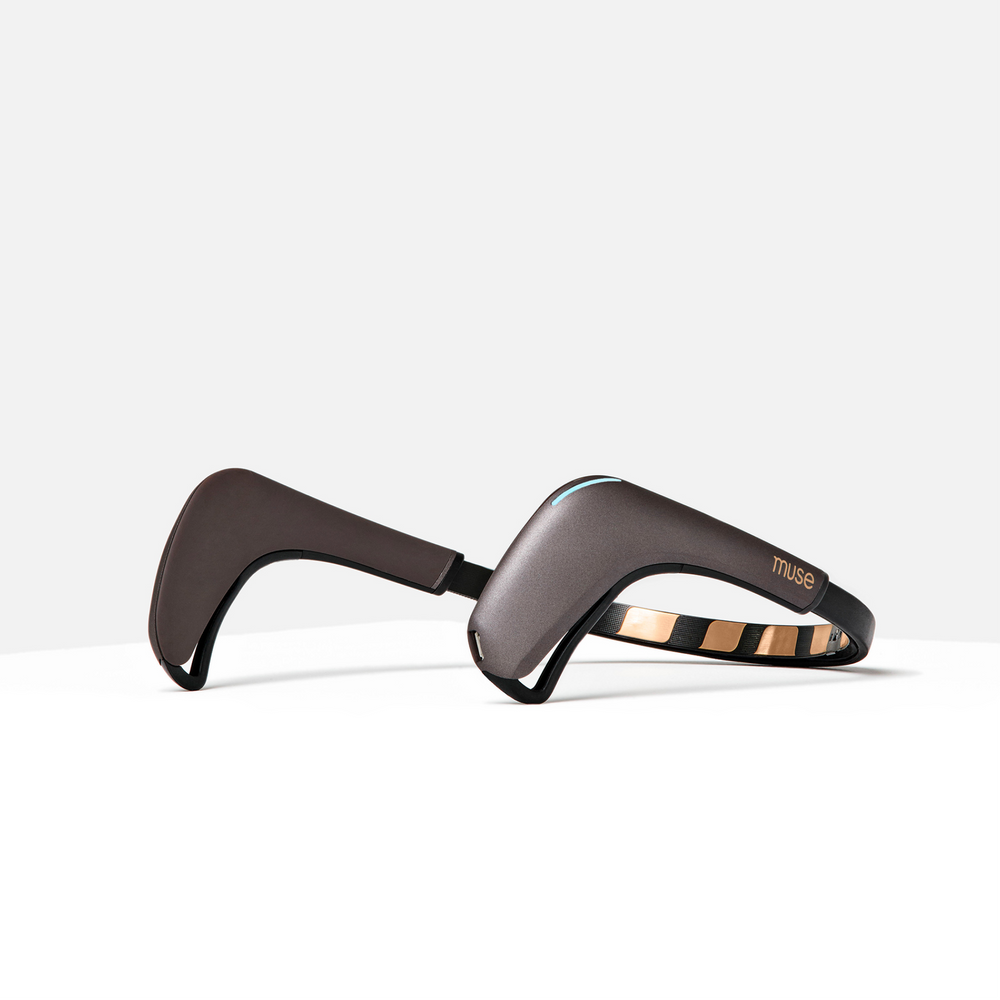
Some wearable applications translate selected EEG features into sounds. Imagine meditating while listening to an ocean soundscape: the application processes incoming signals and adjusts the audio according to programmed rules. As measured patterns change, the sounds may change too.
This is not the same as hearing your thoughts. The sound is a representation created by software from selected measurements. Some people may nevertheless find the interactive experience engaging.
Understanding the brainwaves measured during meditation

Your brain remains active even when you are resting. EEG recordings contain rhythmic patterns that scientists describe in frequency ranges measured in hertz (Hz), or cycles per second. Researchers study these ranges in relation to sleep, attention, memory, and other brain processes.
Delta, theta, alpha, beta, and gamma describe approximate frequency ranges. Their functions overlap, and multiple rhythms can occur at the same time.
Does meditation change brainwave activity? Some studies have observed changes in alpha and theta activity during particular meditation practices. Findings vary with the technique, the participant’s experience, and the recording conditions. No single frequency proves that someone is meditating successfully. A systematic review of mindfulness and EEG oscillations examines research in this area.
What is neurofeedback, and how does it work?
Neurofeedback is a form of biofeedback. Biofeedback presents information about physiological activity so a person can practice responding to selected bodily processes. Heart-rate biofeedback uses cardiac information; EEG neurofeedback uses selected features of electrical brain recordings.
Neurofeedback systems differ considerably. Evidence depends on the specific protocol, intended outcome, and quality of the research. Not every EEG meditation application has been shown to produce lasting improvements in attention, emotional regulation, or well-being.
What does scientific research actually support?

Can meditation influence brain activity? Research suggests that activity can change during meditation, although patterns differ across practices and individuals.
Can meditation support well-being? A systematic review and meta-analysis found evidence of modest improvements in some outcomes, including anxiety and depression symptoms, among the populations studied.
Does EEG feedback make meditation more effective than meditation alone? The answer remains less settled. Results depend on the device, protocol, population, and outcome being measured. A device’s ability to record brain activity is not by itself proof that it improves mental performance.
What does EEG tell us about consciousness?

Researchers may observe changes in EEG activity as someone moves from wakefulness into sleep, for example. Those measurements provide useful evidence, but they do not fully explain why conscious experience feels the way it does. The relationship between physical brain processes and first-person experience remains an open scientific question.
Meditation, neuroplasticity, and learning
The brain’s ability to change through learning and experience is called neuroplasticity. It includes changes in connections between neurons and in how neural networks function. When someone practices a skill repeatedly, the brain may adapt to the demands of that activity.
Researchers have studied meditation in relation to these processes. Some studies report differences in brain function or structure associated with meditation experience, but results vary, and not every difference can be confidently attributed to meditation itself. Changes observed during one session are also different from lasting adaptations over time. An EEG headband cannot, by itself, demonstrate that beneficial neuroplastic change has occurred.
Bringing meditation into everyday life

The value of mindfulness may extend beyond a meditation session. Imagine working on an important task when a notification interrupts you. You reach for your phone almost automatically, then notice the impulse and choose to finish your task. That small pause illustrates how awareness can create an opportunity to choose a response.
Other examples include noticing tension before a difficult conversation, returning to work after a distraction, or recognizing frustration before deciding what to say. EEG feedback may add an interactive element during practice, but useful habits are applied beyond the session.
Try a five-minute meditation with or without EEG
Find a comfortable place to sit. Spend about one minute on each step below. This is a suggested practice, rather than a validated treatment protocol.
Minute 1 — Settle. Notice the support of the chair or floor and the room around you.
Minute 2 — Breathe. Observe comfortable, natural breathing without forcing its pace.
Minute 3 — Notice and Return. When attention wanders, acknowledge the distraction and return to breathing or surrounding sounds.
Minute 4 — Rehearse. Imagine a realistic challenge, such as a frustrating conversation, and one patient response you could practice.
Minute 5 — Apply. Choose one useful action for later. If you use compatible EEG feedback, treat it as an optional cue to return attention. You do not need a particular score.
My Thoughts: The CHIETAL Perspective
I view technology as one possible aid to self-observation, while metaphysics invites questions about the observer and the experience being observed. The principle of Mentalism in The Kybalion draws my attention to the meaning I give a score. A number can become encouragement or judgment depending on the story I attach to it.
That is a philosophical interpretation, not proof that consciousness can be reduced to an EEG signal or that thoughts control external events. Science evaluates particular measurements and training outcomes; metaphysical reflection explores broader questions of meaning and experience.
The principle of Cause and Effect also reminds me to consider the next action. If feedback leads me to sit comfortably and practice returning attention, it may serve my goal. If I become preoccupied with winning, I can change how I use it. My responsibility is to examine the relationship, not surrender judgment to the device.
The philosophical principles discussed here are presented in The Kybalion. They are interpretive lenses, rather than established laws of neuroscience.
If an exercise increases distress, stop or modify it. Meditation and consumer EEG feedback should not replace appropriate medical, psychological, or educational support. You can learn about benefits and limitations in the NIH overview of meditation.
Continue learning with What Is EEG? Understanding the Technology That Measures Your Brain and Can Meditation Improve Focus? When a Quick Phone Check Becomes Twenty Minutes.
Begin With the Free 7-Day Challenge
Bring this learning into everyday life. Subscribe to CHIETAL for the free 7-Day Brain & Mindfulness Challenge and more science-informed articles about attention, habits, and awareness. Seven days introduces a practice; it is not a deadline for changing your brain.